War Curiosities: Normandy 1944. A Step Closer to Victory.
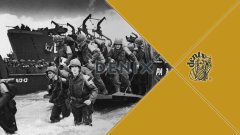
War Curiosities: Normandy 1944. A Step Closer to Victory.
Have you ever felt that sinking feeling in the pit of your stomach right before a moment that will change your life forever? Have you ever felt seasick while crossing the ocean or navigating choppy waters? I assure you, what you are about to read will churn your insides and, perhaps, weigh on your conscience. Because what you are about to experience is akin to what many men endured decades ago. I’m talking about that distant June 6, 1944, when thousands of American soldiers, packed into roaring landing craft, barrelled toward the beaches of Normandy. And let’s not forget the Germans defending that sector of the French coast; they too faced a hurricane of fire that scorched the Norman coastline from end to end.
At the break of dawn, as a prelude to what would become a bloody day, hundreds of vessels of all shapes and sizes battled the rough swells shaking the English Channel. Since the beginning of the month, the weather seemed determined to punish one of the most iconic stages of World War II.

Some of those vessels, armed with heavy-calibre guns, relentlessly spat shells at a vast target named Normandy. The noise was deafening. Others, designed to transport assault troops, were battered by the unforgiving waves. Thousands of M1 Garand rifles stood out against the stark silhouettes of those boats, packed with men barely holding their breath—not to mention the vomit already staining many uniforms. The sea, far too rough, tossed the boats where soldiers, packed like sardines, prepared for a battle whose roar would echo through the pages of history books.
Men invaded by uncertainty, curiosity, courage, and, of course, an overwhelming fear seeping from eyes that stared without seeing. Eyes devoid of shine. Eyes full of hopes, dreams, and illusions about to shatter, along with their souls, at any moment...
I was there, on that beach codenamed Omaha, but decades later. I remember my first trip to Normandy; I was barely in my twenties—just like many of the soldiers who fought and died there during their first visit. I remember the smell of the sea perfectly: intense, heavy with sorrow and memories of the past. There, at Omaha, I experienced one of my most profound research trips. Why? Come with me, and you’ll find out.
How did we get to “D-Day”?
From the dizzying perspective of hindsight, the memory of Operation Dynamo in the spring of 1940 seems like a mirage: the evacuation of thousands of British Expeditionary Force soldiers, along with a significant contingent of French and Belgian troops, from the continent to England, while Western Europe was consumed by the flames of the nascent Second World War. Back then, the Wehrmacht seemed to bulldoze everything in its path. Nations crumbled under its devastating momentum in weeks; others were on the brink.
But the distant spring of 1940 eventually faded into the soldiers' memories. War had since shaken North Africa, the Pacific, Southern Italy, Eastern Europe, and Asia. Germany, along with its allies, pushed into USSR territory in another spring, that of 1941, launching Operation Barbarossa—Adolf Hitler’s bold attempt to dominate the vast country ruled with an iron fist by Stalin.

Stalin had repeatedly requested his allies open a second front—a major one—capable of diverting some of the German resources committed to the war against the USSR. Since June 22, 1941, both nations had been locked in a savage, primitive combat unparalleled in scale and brutality. There, in Russia, was where the "real war" was being fought.
Meanwhile, the Soviet Union’s allies, notably the UK and the US, began conceiving and executing Operation Bodyguard. Conceived in mid-1943 and presented around the Tehran Conference (Nov 28 - Dec 1, 1943), its main goal was to deceive the Germans, sow confusion, and divert attention from the exact location of the Allied landing intended to open that crucial second front. that place was none other than the beaches of Normandy.

Operation Bodyguard was divided into multiple deception campaigns. Some focused on Italy, southern and western France, and other European countries. I must highlight Operation Fortitude, the one that truly concerns us, focused on drawing German resources away to other points of European geography. This operation was subdivided into two:
-
Operation Fortitude North: aimed to simulate an attack on Norway. A fictitious army, the British Fourth Army, was created. Despite its history in the Great War (1914-1918), this time it existed only to keep German forces in Norway occupied from its base in Edinburgh, Scotland. Through intense (and fake) radio traffic, double-agent leaks, and troop movements in Scotland, the plan worked.
-
Operation Fortitude South: simultaneously, the focus shifted to feigning a landing at the Pas-de-Calais, France—the closest point to the British Isles and the shortest route to Germany (the obvious choice). The First US Army Group—also fictitious—was created and placed under the command of General Patton himself, a figure highly conspicuous to the German High Command. Like the northern operation, thousands of fake radio transmissions, troop movements, espionage, and even dummy tanks and camps were set up in southern England.
So, were these elaborate ruses effective? Absolutely. Consequently, many Wehrmacht resources were pinned down far from the Normandy coast, where hell was about to break loose months later.

All or Nothing. The Hours Before the Landing.
On June 5, 1944, the weather was wretched over parts of the English Channel. Biting winds and gusty rain lashed the strip of sea separating England from France. The Allies on the island. The Germans on the continent. They had been playing cat and mouse for too long. The unbearable tension was finally about to break.
The fate of thousands rested on one man’s shoulders. Everyone, on both sides of the Channel, waited with frayed nerves. General Dwight D. Eisenhower, the Texas-born Supreme Allied Commander, weighed the decision that would stamp his mark on history. In an oppressive atmosphere, surrounded by select officers, speaking up was no easy task. But suddenly... "Let's go!" he exclaimed after weighing hundreds of factors for and against Operation Overlord. It couldn't be delayed. Tens of thousands of men had been waiting for days, crammed into camps, airfields, and ports.

The news spread like wildfire. From Eisenhower's HQ to the lowest-ranking private, word traveled at breakneck speed. Some thought it was a joke—the landing had been postponed repeatedly due to bad weather. Others, eager for action, readied themselves with eyes wide with uncertainty. The moment of truth had arrived.
Forecasts predicted a brief "window" of relative calm. Eisenhower decided to play that hand. All or nothing. Otherwise, the invasion would have to be postponed for weeks—inconceivable.
Meanwhile, some high-ranking German officers, including Erwin Rommel himself, decided to leave the Normandy coast for a few days of leave. Most didn't expect an Allied landing given the harsh weather. Besides, if it happened, Field Marshal Rommel trusted the Atlantic Wall would be impregnable. At least in Calais; he wasn't so sure about the Normandy beaches. If only he had more time, more resources... These thoughts flashed through his mind on the way to a brief reunion with his wife for her birthday, joined by their son, Manfred.

Eternal Night. June 5 to 6, 1944.
Via its special services, the BBC broadcast regular messages to the continent to alert the French Resistance of the exact invasion date. One of those verses, attributed to poet Paul Verlaine, was broadcast on June 1st:
“Les sanglots longs des violons de l’automne…”
The French resistance members who recognized the "Chanson d’automne" (Autumn Song) held their breath. The liberation of France was near!
The second part of that awaited message came after 9:00 PM on June 5, 1944. The invasion is about to begin!
“…Versen (Blessent in the original) mon cœur d’une langueur monotone”.
Who would have thought! A simple snippet of a poem symbolized the start of the invasion! Upon hearing the coded message, hundreds of French Resistance fighters in Normandy dusted off their weapons and left their hideouts to begin massive sabotage operations. Any relevant installation or German communication network had to be harassed or disabled to aid the Anglo-American troops arriving in France in a matter of hours.

One of the first contingents to leave for Normandy were the Pathfinders. These daring soldiers, aboard C-47s taking off from RAF North Witham, undertook a risky flight that placed them across the Channel in minutes.
Once there, they jumped into the darkness. Just past midnight, like mushrooms suspended in the air, parachutes descended in silence. Silk canopies swayed by the wind, carrying about two hundred men. Airborne infantry upon whose bravery depended the lives of thousands of paratroopers who would follow hours later.

On the ground, against the backdrop of German flak, they set up beacons to guide the coming waves of planes and gliders. More Allied paratroopers would soon fill the Norman skies. But that is a story for another chapter.
D-Day has arrived! There is no turning back!

First Hours of June 6, 1944, at Omaha Beach.
Meanwhile, miles away, thousands of Allied soldiers headed toward the beaches in all manner of craft. They navigated rough seas. Tension was etched on their faces. Nerves, anxiety, and nausea mingled in a sea of uncertainty, too choppy for a smooth ride across the Channel.
At dawn, lines of boats aimed for the French coast. One column, made of dozens of personnel carriers, ferried hundreds of men to Omaha Beach. There, a curtain of smoke rose from the bluffs beyond the sand. Previous bombardments and naval gunfire had created a dense fog wrapping parts of Omaha in a sinister embrace.
The defenders, German troops who couldn't believe their eyes, readied for combat. The tide of boats spelled trouble. Cannons, guns, and mortars were trained on the water. The tide seemed to push the boats toward land at a devilish speed.

Inside, American soldiers prayed to every god they knew. Many hoped the preliminary pounding by air and naval artillery had taken out all resistance. Some thought landing in Normandy would be a cakewalk... that they’d barely use their weapons, like the M1 Garand many clutched with hands splashed by the seawater soaking their olive-drab uniforms.
The stench of burnt fuel and salt mixed grimly. Nerves on edge. Heavy swells. More than one soldier vomited on the wet floor of the boat taking him to his date with history. Others lost control of their bowels. Urine and waste stained the uniforms of several infantrymen. The imminent assault was wreaking havoc before it even began. Anyone claiming not to be terrified was either crazy or a liar.

Soon, the first German shells rained down around the landing craft, tossed like toys by five-foot waves. The assault boat engines roared at full power, but earth-shattering explosions drowned them out.
The whistle of shrapnel cut the air, heralding tragedy. Wooden boats showed the deadly effects. The first dead and wounded collapsed on the deck, never having touched dry land. Icy seawater mixed with warm blood. A horrific sight.

The front ramp was the only protection for the crew of these floating coffins. The rattle of shrapnel and waves hitting the ramps drove men to the brink of madness. Officers tried to maintain order among the troops—many just kids, barely twenty—heading into a howling hell. Some had zero combat experience; their innocent eyes betrayed their rawness.
The landing point loomed larger. No one could stop this charge now.
In the final yards to Omaha, soldiers readied their rifles. The intense mortar hail promised a hard fight. Some boats blew up from direct hits or mines on wooden posts hidden by the tide. Others nearly capsized. The creaking of the boats made the bravest hairs stand on end. Trembling fingers checked weapons. Soldiers mechanically checked their M1 Garands. Everything seemed in order. Furtive glances confirmed it. Nothing could be left to chance now that the fight was inevitable.

Hell Breaks Loose. Landing at Omaha Beach.
Whistles and sharp orders commanded men to abandon ship. Swarms of bullets flew over the heads of the first wave. Too much danger! Where was the artillery cover? What about the air support? These questions hammered the infantrymen’s minds. Throats gripped by indescribable anguish couldn't make a sound.

The first boats touched the obstacle-strewn sands of Omaha. Heavy ramps dropped with a loud crash. A dull, dry thud capable of freezing anyone's blood. But louder still was the sound of machine guns and rifle fire from German troops on the bluffs. Dozens of Americans fell face forward in the boats, cut down by accurate bursts before they could step out. Total shock for the survivors. Moments ago, no one expected such a reception.
Those who miraculously left the boats jumped into the water. The lucky ones found the water waist-high. A freezing embrace from the French beach. Perhaps the lesser evil given the view ahead. Others, struck by misfortune, drowned, dragged down by heavy gear into the red-stained, agitated waters. Explosions roared, and bullets whistled around the survivors.

Americans dodging the initial slaughter advanced painfully. Dizzy, soaked, shocked, with the shore behind them where countless bodies bobbed in the surf, they hit the dirt and fired at the bluffs. M1 Garands spat lead endlessly. Men fought fiercely, evidenced by the shell casings surrounding those still in one piece, firing at an invisible enemy amidst the chaos. The smell of gunpowder, salt, burning fuel, and the sinister scent of death—rivers of blood and eviscerated comrades—made even the toughest retch.
From the ridges, German trenches and bunkers unleashed a gale of destruction. MG-42s and Kar-98s joined mortars and artillery in the annihilation. From bunkers, officers directed devastating cannon fire, guilty of much of the massacre. Bodies lay everywhere. Green soldiers shared the nightmare with veterans whose grim faces offered no comfort. All watched comrades blown to pieces. Mines and artillery wreaked havoc at will.

Bloody rags macabrely decorated the beach. Someone screamed for a medic, leg gone, dragging himself into a crater packed with terrified soldiers. A group fired their M1s, emptying clips with amazing speed. It didn't matter; seconds later, MG-42s swept them away without mercy. Their perforated bodies bled out on the sand.
Where are the reinforcements?! What kind of hell is this?! Someone get us out of this slaughterhouse! Screams rose into a sky choked with blinding smoke. Medics couldn't work; German bullets and grenades sprayed death everywhere. They fell too.

Pinned down, sheltered by beach obstacles, with most officers dead, the fate of the first wave hung by a thread. Their weapons seemed ineffective. No matter how much they fired their M1s, resistance was fierce.
What would become of these men? Would High Command send more waves? Would they order a retreat?
The M1 Garand Rifle. Lethal Protagonist of the Landing.
Designed by John Garand, the M1 can be considered the first standard-issue semi-automatic rifle. It underwent a long development process starting in the 1920s, with the final design appearing in the late 30s. Specifically, in the summer of 1933, the “T1E2” prototype was designated “Semiautomatic Rifle, Caliber .30, M1” and given to the Army for field trials.

After hurdles and adjustments, the summer of 1937 marked the starting point. With Army approval, production began at Springfield Armory, Massachusetts. Despite meeting initial expectations, the M1 underwent redesigns to prevent short-term issues.
By 1940, a redesigned version was mass-produced. By late 1941, almost the entire US Army was equipped with the M1.
Weighing about 10 lbs (4.5 kg) empty and over 11 lbs loaded, the M1 was manageable and precise. The en-bloc clip fed 8 rounds of .30-06 Springfield ammo. Being semi-automatic, it had an edge over contemporaries like the German Kar-98 and Russian Mosin Nagant—bolt-action rifles requiring manual cycling after every shot (with only 5-round capacities). The gas-operated M1 automatically chambered a new round after firing. When empty, the clip ejected with a distinctive "ping," alerting the user the chamber was open for a fresh clip.

Another advantage was its fire rate. A well-trained soldier could fire 40-50 rounds per minute—far superior to rivals, even the British Lee-Enfield.
In terms of effective range, the M1 shone. While it could exceed 600 meters with iron sights, the Kar-98 and others ranged between 500-550 meters.

In short, despite being slightly heavier, the M1 was effective, lethal, and reliable. It was highly valued by enemies and US officers alike, including General George Patton, who called it:
“In my opinion, the M1 rifle is the greatest battle implement ever devised.”
Millions were produced during WWII, along with bayonets, grenade launchers, and sniper scopes. The M1 saw horror in Korea and Vietnam too. It has rightfully gone down in history as an icon of 20th-century warfare.

A Ray of Hope in the Hell of Omaha.
Since early morning, successive waves of Americans managed to land. Gear was scattered everywhere. Men huddled against sea walls and dunes, sheltering from the German artillery punishing the Allies.
Total chaos. As hours passed, some tanks managed to land to support the infantry. Misfortune plagued the Shermans; those surviving the sea were soon destroyed by German guns.
Thanks to the energetic action of a handful of officers, followed unconditionally by their men, they breached some draws leading inland. Valleys of death where advancing a yard meant horrific casualties. Combat engineers worked heroically, risking everything to blow up obstacles. Taking those hills became decisive. Officers spurred their men: "We’ll die like sheep on the beach or as heroes taking those positions!" That duality was all that occupied the minds of those leading the advance amidst the roar of M1s.

News finally reached Eisenhower. Initially devastating—almost leading to a retreat order—chaos turned to hope. Men had broken through! The General sighed in relief, embracing his blind faith in his soldiers. Exits like Vierville were finally open, though enemy artillery still harassed them.
Sunset in the Slaughterhouse.
Hours dragged. A hemorrhage of men with every action to clear the last German holdouts. Those not cut down by M1s and Thompsons surrendered. Continuing the fight made no sense.
Reaching the hilltops, surviving Americans were stunned. Empty stares fixed on the corpses scattered across the beach or bobbing in the crimson surf. Up there, in the German WNs (resistance nests), they found enemy bodies surrounded by casings and abandoned gear. They too were victims of the day’s brutality.

Occasionally, a solitary M1 shot rang out. Or a sporadic enemy shell. The battle for Omaha was over. This dramatic episode was just the start of the hard push into France and Germany. The war had many months—and bodies—left to count.
The German High Command knew they had lost a golden opportunity to stop the second front. Rommel had said the invasion must be stopped on the beaches in the first 24 hours. His request for Panzer divisions near the coast had been ignored. Reinforcements were coming, but too late. The sun was setting on the Third Reich. Especially when, weeks later, the Red Army unleashed Operation Bagration on June 22, sweeping the Wehrmacht out of Soviet territory.
Operation Overlord’s initial goals were met... at a very high price.

Night Falls on D-Day.
Was the sacrifice worth it? Perhaps one soldier asked himself that, standing atop a hill overlooking Omaha, M1 in one hand, canteen in the other.
Like him, but decades later, I reflected on that same hill. Was the titanic effort worth it?
I won't answer that. I prefer the reader does, especially if you’ve visited this place. You know that up on those bluffs, you can still feel the loneliness, the pain, and perhaps, a bit of hope in humanity.

Did it matter? I only know that soldier was resupplied with ammo and ordered inland. The fight for countless green soldiers had just begun that spring day in 1944.
What became of him? Many perished anonymously; others returned home carrying the living memory of human madness. Those who experienced D-Day changed forever. How could they not?

One symbol of D-Day was the effective M1 Garand. A tangible reminder of that apocalyptic day.
Man and rifle. An inseparable team that will endure in history.
Share if you liked it!
Daniel Ortega del Pozo www.danielortegaescritor.com
PS: For more info on the M1 Garand, visit this link to see an incredible replica by the prestigious brand Denix: https://www.denix.es/es/catalogo/guerras-mundiales-1914-1945/rifles-carabinas-y-fusiles/1105/


 Denix
Denix
c/ Bijuters, 6, Polígono Industrial
07760 Ciutadella de Menorca
Balearic Islands - Spain
Telephone: (+34) 971 38 15 61 - 629 872 838
www.denix.es
Legal notice Privacy policy Cookies policy Cookie settings Warning Sitemap © Copyright 2016-2026 Denix S.A.
With the support of